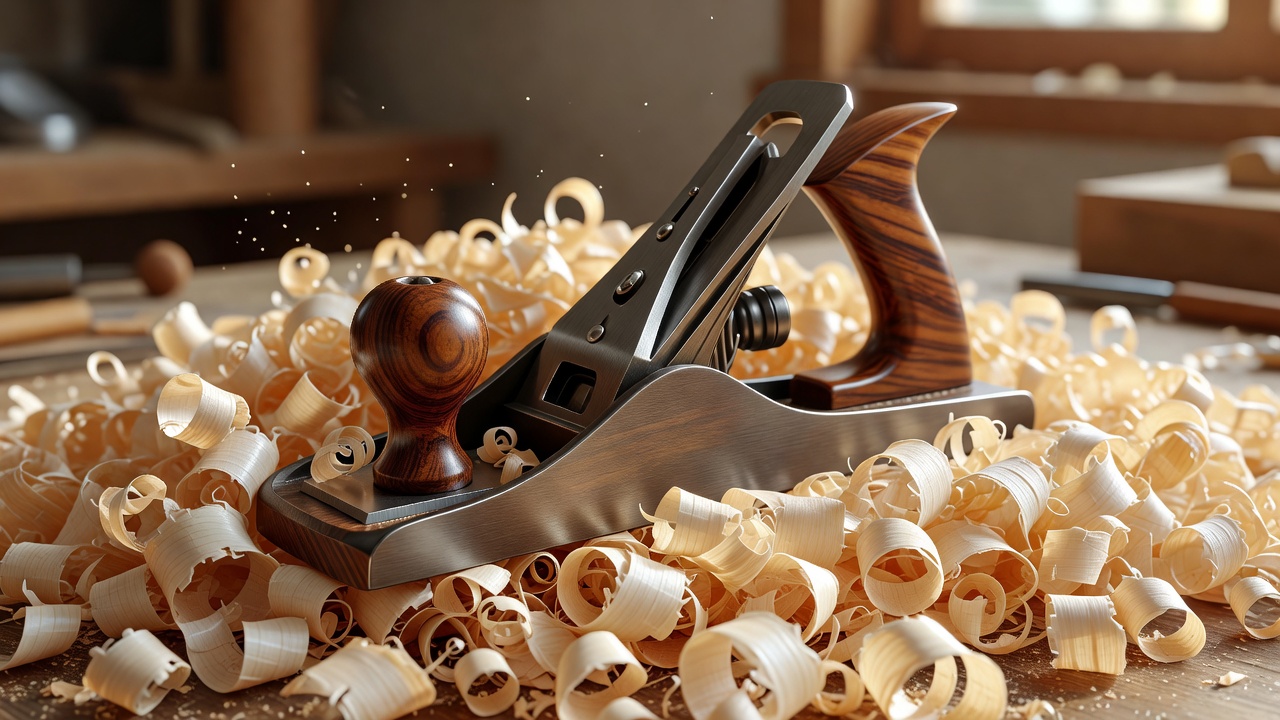
In an era dominated by high-speed routers and drum sanders, the hand plane remains an irreplaceable tool for achieving glassy-smooth surfaces and fine-tuning joinery. A well-tuned plane severs wood fibers cleanly, leaving a surface that sandpaper can only hope to mimic. Understanding the anatomy, mechanics, and variations of hand planes is the key to unlocking this traditional art.
The Hierarchy of Bench Planes
Hand planes are generally categorized by length, based on the historical numbering system established by Stanley in the late 19th century. The length of the sole determines the tool's purpose.
- Block Planes (Typically #9½ or #60½): Small, single-handed planes used primarily for trimming end grain, easing sharp edges (chamfering), and small-scale fitting work.
- Smoothing Planes (#3, #4, #4½): Designed with soles between 8 and 10 inches, smoothers are used as the final step before applying finish. They ride over local undulations to shave off micrometer-thin ribbons of wood.
- Jack Planes (#5): At around 14 inches long, the jack plane is the "jack of all trades." It is long enough to flatten short boards but nimble enough to remove material quickly when fitted with a cambered (curved) iron.
- Jointer Planes (#7, #8): Measuring 22 to 24 inches in length, jointer planes are strictly for flattening and straightening. The long sole bridges gaps and high spots, cutting only the peaks until the entire surface is dead flat.
Bevel-Up vs. Bevel-Down Configurations
The orientation of the cutting iron profoundly affects how the plane interacts with the wood. Traditional bench planes are bevel-down, resting on a cast-iron mechanism called a frog, usually pitched at 45 degrees. A chipbreaker is bolted to the back of the iron to curl shavings and prevent tear-out in highly figured grain.
In contrast, bevel-up planes (often called low-angle planes) have the iron resting directly on a bed machined into the sole, typically pitched at 12 degrees. Because the bevel faces upward, the effective cutting angle is the sum of the bed angle and the sharpening bevel. Changing the cutting angle simply requires swapping or re-honing the blade. This simplicity, combined with excellent end-grain performance, has made bevel-up designs highly popular in modern workshops.
Blade Metallurgy: O1 vs. A2 Steel
The cutting iron is the soul of the plane, and modern metallurgists offer options that balance edge retention and ease of sharpening.
O1 high-carbon steel is prized for taking an exceptionally keen edge very quickly on standard water stones. However, it dulls faster than its modern counterparts. A2 tool steel, alloyed with chromium and molybdenum, is much tougher. It holds an edge significantly longer, particularly in abrasive woods, but requires more time and coarser abrasives to re-establish the bevel once blunted. Advanced options like PM-V11 powder metallurgy bridge this gap, offering A2-like retention with O1-like sharpening characteristics.
The Art of Tuning
A plane straight out of the box is rarely ready for fine work. Tuning involves lapping the sole on abrasive paper adhered to a dead-flat reference plate (like granite or thick float glass) until it is perfectly planar. The back of the cutting iron must be polished to a mirror finish, and the mating surfaces of the frog or bed must be cleared of any burrs. Only when these structural elements are perfected can the blade take the whisper-thin shavings characteristic of masterful hand tool woodworking.