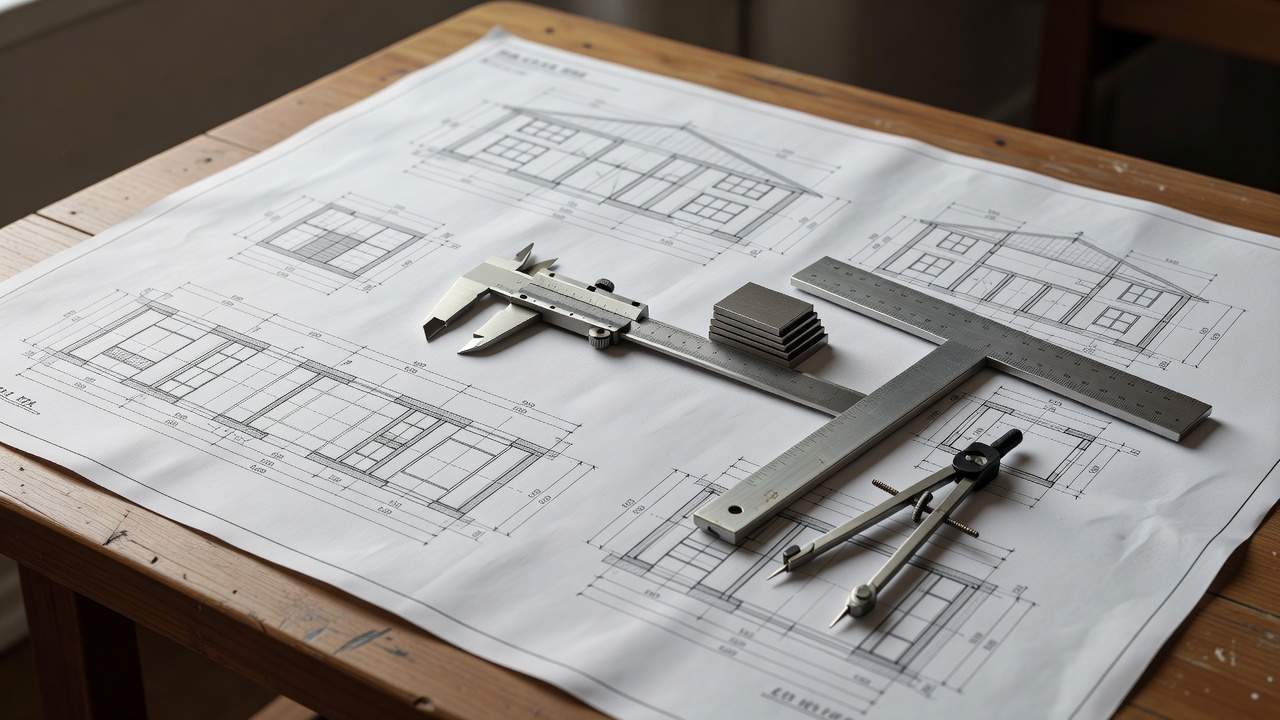
Before a saw blade spins or a chisel strikes wood, a project succeeds or fails during layout. If the foundational measurements and reference lines are flawed, those errors compound throughout the entire build. Equipping a workshop with high-quality, reliable measuring tools is an investment in predictably excellent results.
The Tape Measure: Versatility vs. Absolute Precision
The retractable tape measure is indispensable for rough layout, carpentry, and breaking down large sheet goods. Key features to evaluate include standout (how far the tape extends before bending), the clarity of the printed markings, and the hook design. The hook on a quality tape measure intentionally slides by an amount exactly equal to its own thickness. This sliding action ensures that both inside measurements (pressing the hook against a surface) and outside measurements (hooking over an edge) remain perfectly accurate.
However, for fine furniture and intricate joinery, tape measures introduce too much variability. At this scale, rigid rules and physical references take over.
Combination Squares
A high-quality combination square is perhaps the most used layout tool in a precision workshop. It consists of a hardened steel rule with a machined groove and an adjustable cast-iron or aluminum head that locks securely at exactly 90 degrees and 45 degrees.
The hallmark of a premium combination square is its machining tolerance. Cheaper squares often rely on paint or plastic to obscure poor casting, leading to heads that rock slightly on the rule. A true machinist-grade square will exhibit no play when locked, ensuring lines drawn across a board face and carried down the edge align perfectly. They are used for marking cut lines, setting router bit depths, and calibrating machinery fences.
Dial and Digital Calipers
When measurements must bridge the gap into the thousandths of an inch or fractions of a millimeter, calipers are required. Dial calipers use a mechanical rack-and-pinion system to turn a highly visible dial, while digital calipers use a linear encoder. Calipers are essential for verifying the thickness of planed stock, measuring the depth of a mortise, or determining the exact diameter of a drill bit or dowel. In woodworking, a 6-inch caliper is typically the ideal balance of size and capability.
Marking Gauges
Pencils are excellent for rough cuts, but graphite lines have thickness. When cutting dovetails or tenons, precision demands a physical severing of the wood fibers. A marking gauge features a beam, a sliding fence, and a cutting implement (either a sharp pin or a small circular blade).
Wheel marking gauges, utilizing a sharp bevel-edged wheel, have largely superseded pin gauges. The wheel slices cleanly across the grain without following the wood's natural growth rings, leaving a crisp, microscopic trench. When executing the cut, a chisel or saw can be physically registered into this trench, ensuring absolute accuracy.
Care and Calibration
Precision layout tools must be treated differently than hammers or wrenches. Dropping a combination square onto a concrete floor can permanently knock the head out of square. Regular maintenance involves lightly oiling steel rules to prevent rust (especially in unconditioned workshops) and periodically verifying squares against a known 90-degree reference to ensure they remain trustworthy over decades of use.