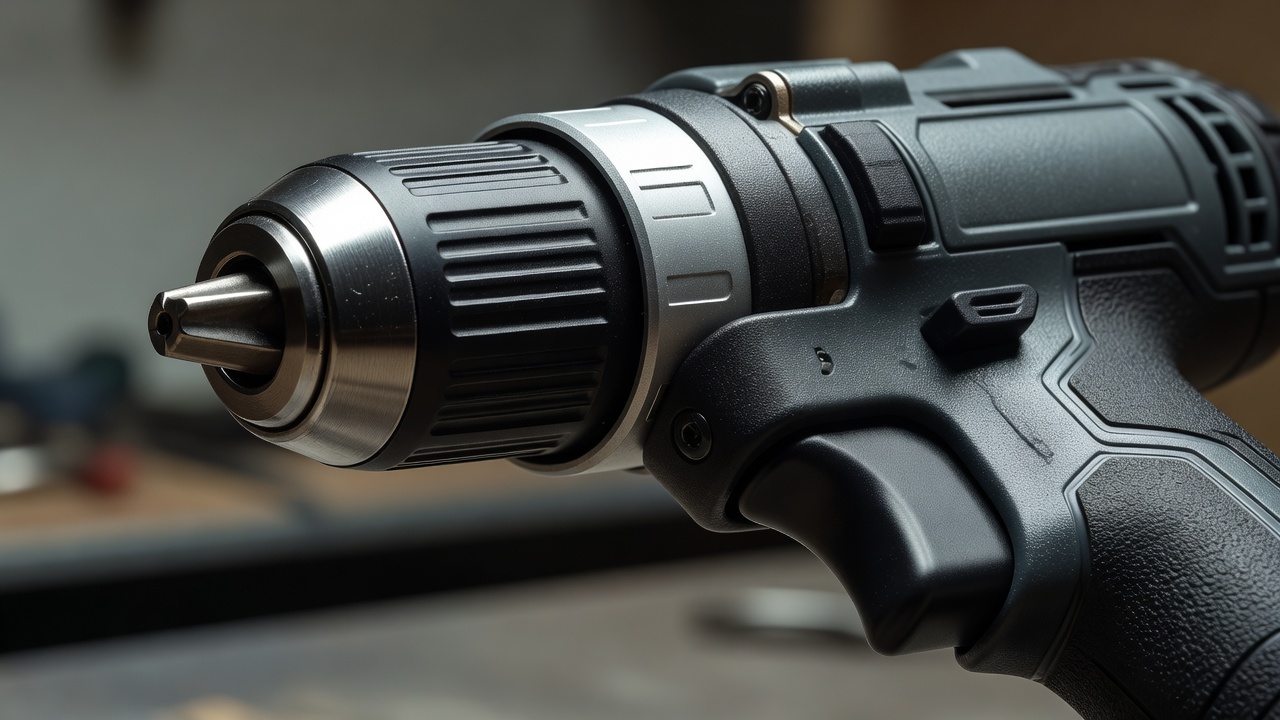
The power drill is arguably the most ubiquitous tool in any workshop, construction site, or domestic utility closet. Over the past few decades, its evolution has been driven by radical advancements in battery chemistry, motor technology, and ergonomic design. Understanding the structural and operational differences between various categories of drills is essential for making informed tooling decisions.
Corded vs. Cordless: The Paradigm Shift
Historically, significant torque and continuous runtime necessitated a corded connection to mains electricity. Corded drills remain unparalleled for high-load, stationary applications—such as mixing thick compounds or continuous heavy boring—because they operate without the thermal limits and capacity constraints of battery packs.
However, the industry has largely shifted toward cordless platforms. Modern 18V and 20V Max systems utilize high-capacity lithium-ion cells that deliver immense peak power. The primary advantage of cordless systems is spatial freedom; the absence of a tether reduces tripping hazards and allows work in remote, off-grid locations. The trade-off requires users to invest in a proprietary battery ecosystem, meaning the initial drill purchase often dictates future power tool acquisitions.
Motor Technology: Brushed vs. Brushless
At the core of the power drill lies the electric motor, available in two primary configurations: brushed and brushless.
- Brushed Motors: These traditional motors use carbon brushes to physically transfer electrical current to the spinning armature. While cost-effective to manufacture, the mechanical friction generates heat, reduces overall efficiency, and inevitably leads to component wear. Brushes must occasionally be replaced, though for occasional domestic use, a brushed motor may last a lifetime.
- Brushless Motors: Instead of physical brushes, a brushless motor uses an electronic controller to switch the polarity of electromagnets. This eliminates physical friction, resulting in significantly less heat generation, higher efficiency (often extending battery runtime by up to 50%), and a more compact motor housing. Though the upfront cost is higher, the longevity and performance benefits make brushless technology the standard for professional applications.
Chuck Types and Capacities
The chuck is the mechanism that secures the drill bit. Drill chucks are categorized by their maximum opening capacity and their method of operation.
Standard capacities are typically 3/8-inch (10mm) and 1/2-inch (13mm). A 1/2-inch chuck is highly recommended for versatility, as it accommodates larger bit shanks common in hole saws and auger bits. While keyed chucks—requiring a separate tool to tighten the jaws—are still found on large corded drills and drill presses, keyless chucks dominate the handheld market. High-end keyless chucks feature ratcheting metal sleeves with carbide inserts on the jaws to prevent smooth-shank bits from slipping under heavy load.
Ergonomics and Clutch Mechanisms
A drill's form factor drastically influences user fatigue. Manufacturers balance the weight of the motor and battery to ensure the tool does not dive forward or lean backward. Pistol-grip designs are standard, but the placement of the handle relative to the motor axis affects balance; mid-handle designs tend to offer the best center of gravity.
The adjustable clutch, a numbered ring behind the chuck, is critical for driving screws. It limits the maximum torque applied, disengaging the drive when resistance exceeds a set threshold. This prevents stripping screw heads, snapping fasteners, or driving screws too deeply into delicate materials. A drill driver will have a standard clutch, while a hammer drill includes an additional mode that introduces a rapid concussive action for masonry boring.
Making the Right Choice
When selecting a power drill, assess the scope of your work. Occasional household tasks may only require a lightweight 12V brushed drill, whereas daily professional framing or decking demands an 18V/20V brushless model with a heavy-duty metal chuck. By looking beyond the brand livery and examining the motor architecture, chuck construction, and battery cell technology, you ensure your investment aligns perfectly with your requirements.