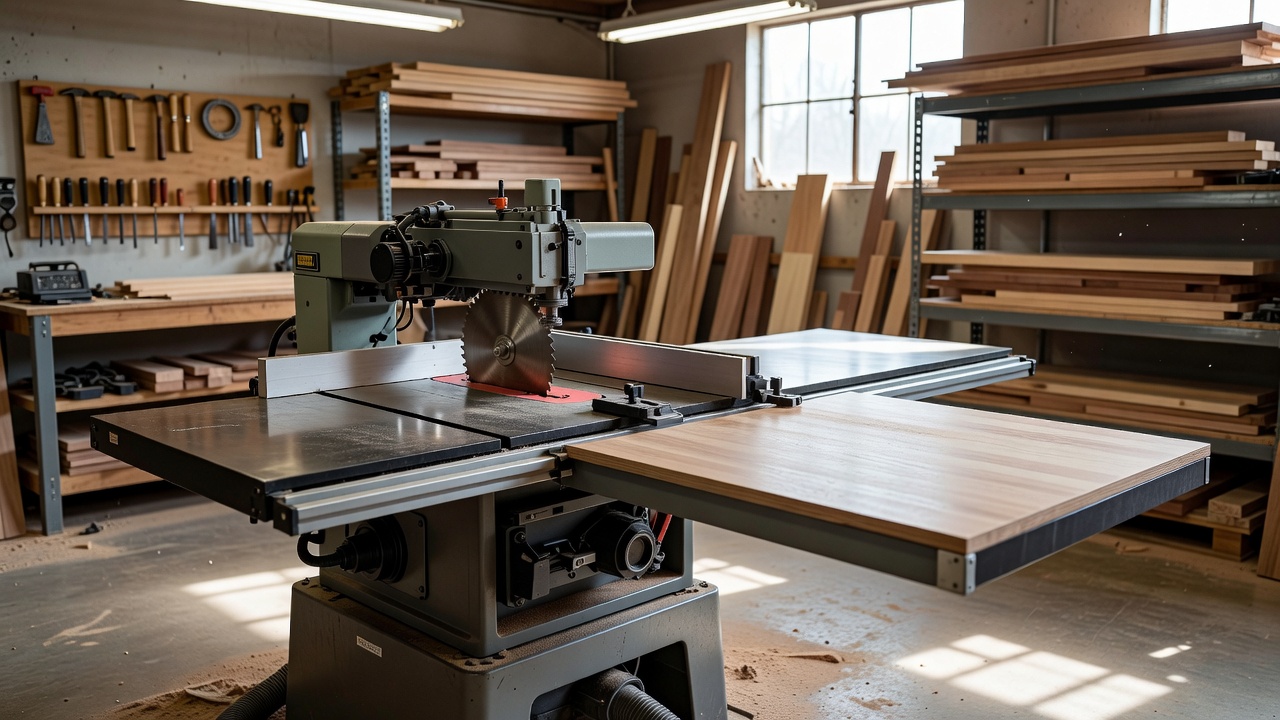
In almost every furniture-making or cabinetry workshop, the table saw serves as the central hub. It is the primary tool for ripping lumber to width and, with the appropriate sleds or jigs, can execute flawless crosscuts, tenons, and dadoes. The precision and safety of these operations depend entirely on the machine's underlying architecture.
Categories of Table Saws
Table saws are broadly categorized into three types, each designed for a different balance of portability, power, and precision.
- Jobsite Saws: Designed primarily for carpentry and construction, these are lightweight, portable, and often feature direct-drive motors. Their tops are usually cast aluminum to save weight. While they excel at portability, their light weight makes them susceptible to vibration, and their fence systems are generally less rigid than stationary models, making high-tolerance furniture work challenging.
- Contractor/Hybrid Saws: These bridge the gap between jobsite and cabinet saws. They utilize heavier cast-iron tops and induction motors, which run quieter and smoother than direct-drive brush motors. The trunnions (the heavy castings that hold the arbor and motor) are often mounted to the underside of the table, though modern hybrid designs mount them to the cabinet frame for easier alignment.
- Cabinet Saws: The gold standard for professional shops. Cabinet saws feature massive, fully enclosed bases, heavy-duty cast-iron tops, and powerful 3+ horsepower induction motors requiring 220V power. The trunnions are bolted directly to the heavy cabinet base, resulting in minimal vibration, superior dust collection, and the ability to hold precision alignments over years of heavy use.
The Rip Fence and Capacity
The heart of a table saw's accuracy is its rip fence. A high-quality fence locks parallel to the blade with absolute rigidity; any deflection during a cut can lead to burning, inaccurate dimensions, or a dangerous kickback. The classic "T-square" style fence is renowned for its reliability. Rip capacity—the maximum distance between the blade and the fence—dictates the size of sheet goods you can comfortably break down. Standard capacities range from 30 inches for general work up to 50+ inches for specialized cabinetry.
Safety Innovations: Riving Knives and Active Systems
Safety cannot be overstated when discussing table saws. The most critical passive safety feature on modern saws is the riving knife. Unlike older splitter designs that remained stationary while the blade raised or lowered, a true riving knife rises, falls, and tilts in unison with the blade. Sitting just millimeters behind the teeth, it prevents the kerf of the wood from pinching the rear of the blade—the primary cause of violent kickback.
In addition to riving knives, modern industrial and high-end consumer saws increasingly feature active flesh-sensing technology. These systems carry a small electrical signal on the blade. Because the human body is conductive, skin contact alters the signal, triggering a braking mechanism that drops the blade beneath the table and stops rotation in milliseconds. While not a replacement for fundamental safe practices (such as using push sticks and featherboards), this technology represents a monumental shift in catastrophic injury prevention.
Dust Collection and Maintenance
Table saws generate immense volumes of fine dust. Cabinet saws excel in dust management by using the enclosed base as a funnel, directing debris to a standard 4-inch collection port. Maintaining a saw involves regular cleaning of the trunnion gears, lubricating them with dry PTFE spray (wet lubricants attract dust), and periodically checking the alignment of the blade to the miter slot with a dial indicator to ensure perfectly parallel cuts.